Thirteen Orphans (十三么)
Taiwanese variant — combines all terminal and honor tiles in a 17-tile structure.





How Thirteen Orphans (十三么) works
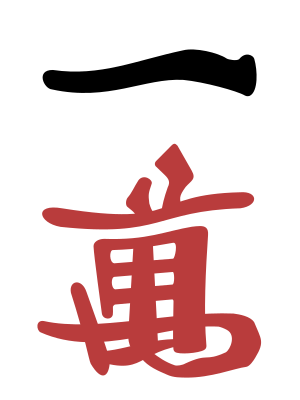
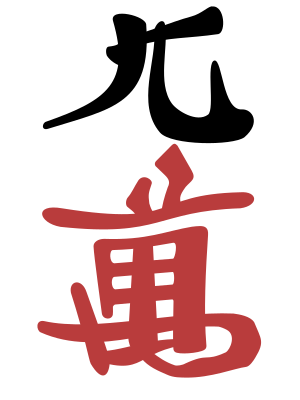
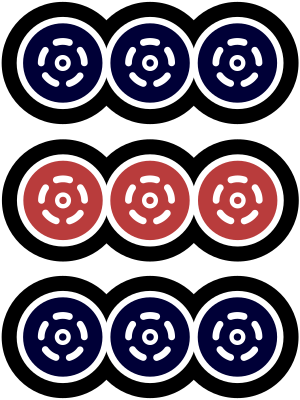
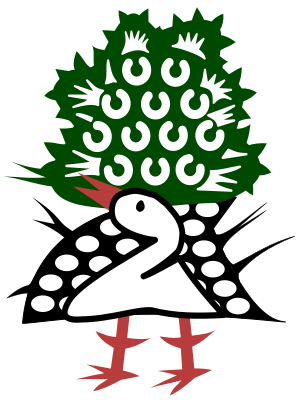
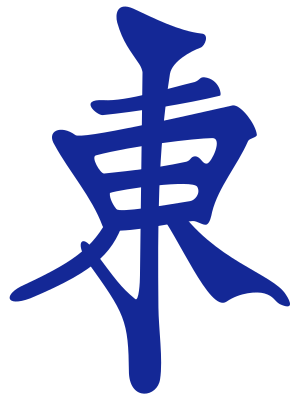
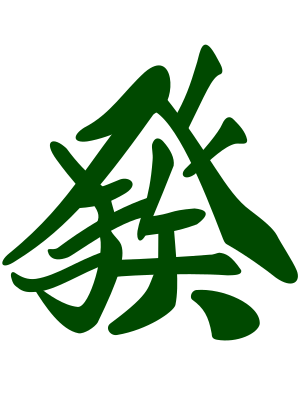
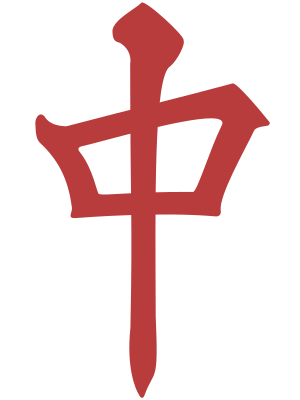
A special hand of one of each terminal and honor tile — the 1 and 9 of all three suits plus all winds and dragons — with one of them duplicated to form the pair. This 14-tile shape comes from 13-tile mahjong; because a Taiwanese 16-tile winning hand is 17 tiles, it is recognized here only as a house-rule adaptation.
Thirteen Orphans is a unique non-standard shape that ignores the usual five-sets-and-a-pair structure, instead collecting all thirteen distinct terminal-and-honor tiles with one paired. It is a high-value limit-style hand and is generally won concealed. Because its tiles are fixed, it cannot combine with suit- or set-based patterns like flushes or All Pungs.
- •It uses the 1s and 9s of dots, bamboo, and characters together with every wind and dragon — exactly thirteen distinct tiles.
- •Any one of those tiles is doubled to make the pair completing the hand.
- •Its fixed composition means it does not stack with structural tai such as one-suit or pung patterns.
Thirteen Orphans (十三么) — FAQ
Why is Thirteen Orphans noted as a 16-tile vs 14-tile concern?
Thirteen Orphans is fundamentally a thirteen-distinct-tile pattern; tables adapt it to their tile count, but its core is the full set of terminals and honors with one paired.
Does it need to be concealed?
By its nature the hand is collected in hand and not melded, so it is effectively a concealed special hand under common Taiwanese rules.