Four Concealed Pungs (四暗刻)
Four concealed pungs or kongs, formed without melding (#12). Winning by discard on the pair keeps them concealed; a discard completing a pung would not.


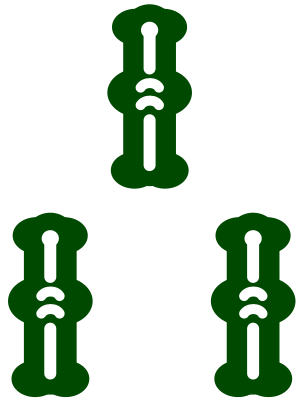
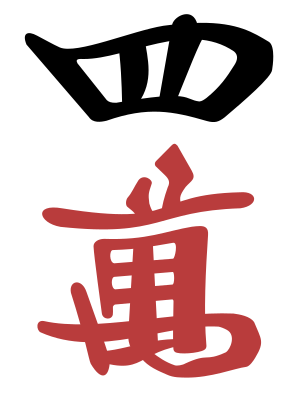

How Four Concealed Pungs (四暗刻) works
A hand of four pungs (or pungs/kongs) where every triplet was formed concealed — none claimed from a discard — plus a pair.
Each of the four pung sets must be self-completed: drawn or held in hand rather than melded by claiming an opponent's discard. The winning tile, if it completes a pung, must generally be self-drawn for that final pung to count as concealed. Because all four sets are pungs, this hand also satisfies the all-pungs structure, which is implied within it rather than scored separately.
- •Every triplet must be concealed; a single melded pung disqualifies the hand.
- •Kongs may substitute for pungs provided they too were formed concealed.
- •The all-pungs character is subsumed and not awarded again.
Four Concealed Pungs (四暗刻) — FAQ
Does the final pung need to be self-drawn?
To keep the completing triplet concealed, the winning tile generally must be self-drawn rather than claimed from a discard.
Is the pair allowed to be claimed?
The concealment requirement applies to the four pungs; the pair does not break the pattern.