Self Draw (自摸)
Winning by drawing the winning tile yourself rather than claiming a discard. (With a fully concealed hand, self-draw upgrades to the combined 3-tai 門清一摸三 instead.)
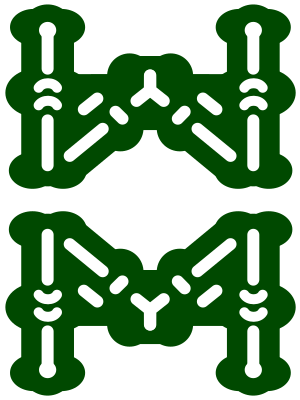
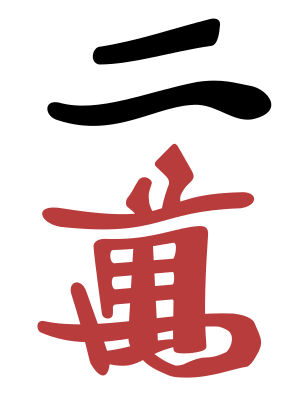
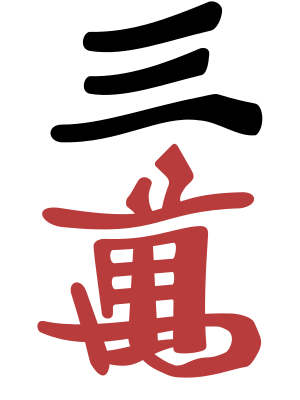

How Self Draw (自摸) works
You complete your winning hand by drawing the final tile yourself from the wall rather than claiming a discard from another player.
Self Draw is awarded whenever the winning tile comes from your own draw off the wall (or from the replacement tile after a kong or flower). It applies to any hand shape and is checked independently of the tiles' suits or sets. Because it depends only on how the last tile arrived, it stacks freely with almost every other tai a hand can hold.
- •If the winning tile is instead a discard claimed from an opponent, this tai is not scored.
- •When the hand is also fully concealed, the dominant convention is 門清一摸三: the combined Concealed Self-Draw entry scores 3 tai total instead of Self Draw 1 + Fully Concealed 1.
- •Some tables treat a win on the replacement tile after a kong or flower draw as a special self-drawn win with its own bonus.
Self Draw (自摸) — FAQ
Does Self Draw require a concealed hand?
No. You can have melded (exposed) pungs or chows from earlier claims and still score Self Draw, as long as the final winning tile is one you drew yourself.
Can both a winner and a discarder share the payment?
On a self-drawn win there is no single discarder, so under common Taiwanese rules all three other players typically pay the winner, unlike a win on a claimed discard.